
The first podcasts from the BRIDGE project are now available on our YouTube channel — a new series of audiovisual content presenting the initial findings of our research on the integration and accompaniment of young migrants in Europe.
 You can access the playlist here: Project BRIDGE
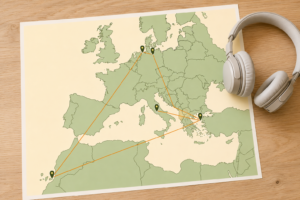
A comparative analysis of European systems
The series opens with a special comparative analysis episode bringing together the key findings of research carried out in Spain, Italy, the Netherlands, Greece and Germany.
Drawing on the research results, the episode explores the shared challenges facing reception and integration systems for young migrants and refugees in Europe, with a focus on key aspects such as coordination between services, the transition to adulthood, youth participation and the building of community support networks.
It also presents examples of good practices identified across the different countries, including continuity mechanisms in accompaniment, intercultural mediation, youth participation programmes and initiatives aimed at strengthening connections between young migrants and local communities.
The central message emerging from this analysis is that effective integration requires going beyond basic protection. Young people need stability, trusting relationships, genuine opportunities for participation and spaces where they can develop autonomy and a sense of belonging.
Situation by country
The series also includes five dedicated episodes analysing the reception and integration systems for unaccompanied migrant minors in each partner country.
Spain
The analysis of Spain reveals a tension between protection and autonomy. Although a solid legal framework exists for the reception of unaccompanied migrant minors, many young people experience highly controlled systems with little participation in the decisions that affect them. The research highlights the need to improve language interpretation, intercultural communication and the active participation of young people themselves in reception processes.
Italy
Italy has a well-structured reception system, with individual plans and monitoring mechanisms from the moment minors arrive. However, the research identifies a significant challenge in the transition to adulthood: upon turning 18, many young people suddenly lose fundamental support. The study recommends strengthening accompaniment during this stage to foster sustainable autonomy.
Netherlands
The Netherlands has specialised services and solid resources for the protection of migrant minors, but coordination between agencies remains a challenge. The research notes that transitions between services and the loss of support upon reaching the age of majority can create situations of vulnerability. The importance of intercultural mediation, peer education and the creation of stable support networks is highlighted.
Greece
The research shows that Greece provides an effective initial response to ensure the safety and protection of unaccompanied migrant minors. However, many young people spend long periods in isolated environments, with limited access to specialised services and few opportunities for community integration. The findings underline the importance of creating spaces for participation, psychosocial support and connection with local communities.
Germany
The German system is characterised by a strong child protection orientation, regarding migrant minors first and foremost as children with protection needs. Nevertheless, the research identifies difficulties in coordination between institutions, particularly during educational and administrative transitions. Improving communication between services and ensuring continuity in accompaniment emerge as key priorities for promoting inclusion.
A shared finding across all five countries
Despite differences between national contexts, the research identifies a shared conclusion: systems tend to focus on guaranteeing physical and administrative protection, but frequently struggle to provide what young people need to build genuine inclusion — trusting relationships, participation, autonomy and a sense of belonging. In other words, protection is essential, but not sufficient. Integration requires listening to young people, recognising their capacities and making them the protagonists of their own process.
Upcoming content
These podcasts are just the beginning.As the BRIDGE project progresses, we will continue publishing new content, including:
- Additional findings from the comparative research.
- Training materials and resources for professionals.
- Interviews and testimonials from sector experts.
- Good practices identified across different European countries.
- Voices of professionals working directly with migrant and refugee youth.
We invite you to subscribe to our YouTube channel and follow the project’s social media channels so you don’t miss upcoming publications.