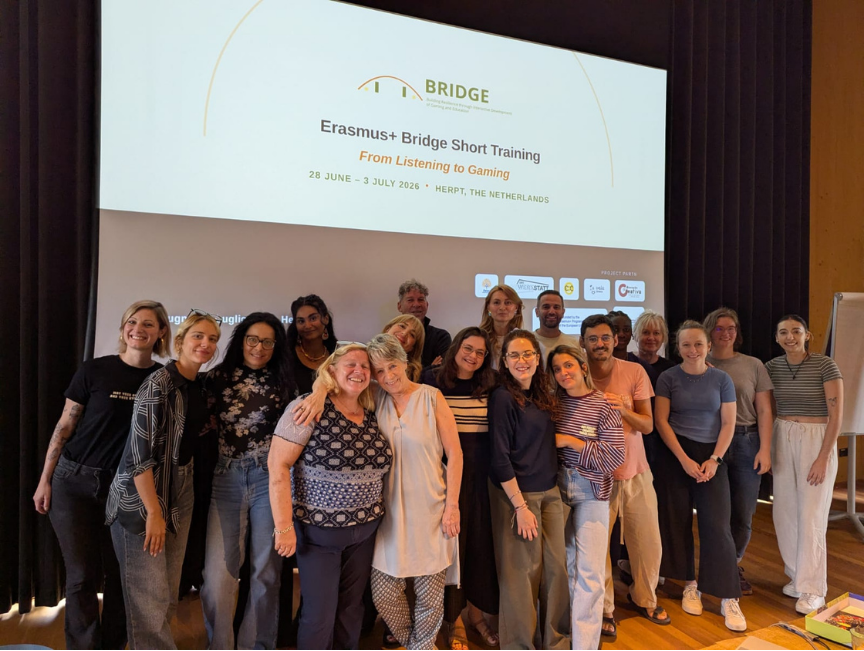
From 28 June to 3 July 2026, the BRIDGE consortium met in Herpt, the Netherlands, for an intensive transnational training programme aimed at strengthening the capacities of youth workers who support young migrants. Representatives from Spain, Italy, Greece, Germany and the Netherlands took part in the event, combining practical learning with collaborative planning for the project’s next stages.
Beyond the training sessions, participants lived together throughout the week, sharing meals, cooking, organising daily tasks and spending time together outside the classroom. This experience helped build not only stronger professional cooperation but also meaningful personal connections, reinforcing the collaborative spirit that underpins the BRIDGE project.
Day 1: Arrival
Arrival of participants from the five partner countries, followed by a cooperative cooking session and an informal welcome dinner.
Day 2: Empathetic Listening
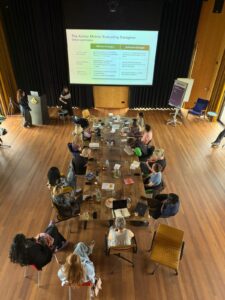
The training opened with a module on Empathetic Listening led by Parsec, starting with an in-depth look at the project’s goals and the upcoming phases of WP3 and WP4. Participants explored non-judgmental, trauma-aware communication, drawing on the experiences and testimonies of operators and young migrants gathered through the project’s focus groups, and reflected on how to recognise and overcome their own professional biases. The day closed with practical workshops putting these listening techniques into practice.
Day 3: Conflict Resolution and Risk Factors for Social Marginalisation and Radicalisation
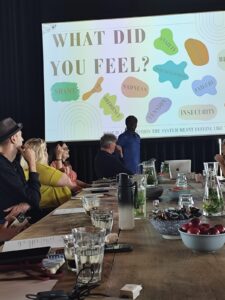 Tuesday focused on the unequal dynamics that can arise between staff and migrant youth, introduced by Asociación Creativa through a mix of theory and interactive exercises on how power imbalances can become a risk factor in youth work.
A World Café session led by Parsec invited participants to map the early signs of marginalisation, compare their approaches to managing conflict and difficult cases, and build shared checklists for identifying warning signs of marginalisation and radicalisation.
The day also featured two shorter sessions: Gewerkstatt shared strategies for supporting queer children and young adults in youth work, while Changes & Chances introduced storytelling techniques as a way for young people to safely express frustration and expectation.
Day 4: A Study Visit to Rotterdam
Wednesday took the group out of the classroom and into Rotterdam, starting with a visit to the FENIX Museum of Migration, dedicated to the human experience of migration through contemporary art, photography, historical objects and architecture. The day continued with the Keti Koti Festival, commemorating the abolition of slavery in the Netherlands through art, music, food and craft — a powerful opportunity to reflect on migration, memory and belonging from a different cultural angle.
Day 5: Peer Education, Gamification and Co-Creation
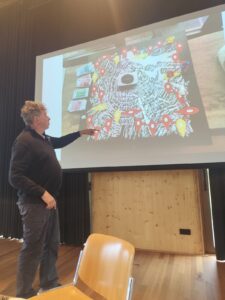 Thursday combined two complementary approaches to youth engagement. A Peer Education Framework session led by Parsec looked at how young people themselves can become educators, drawing on staff experience and video testimonies, followed by a gamification session from Changes & Chances demonstrating games and discussing play as a tool for breaking down communication barriers.
The day’s highlight was the first co-creation workshop for Mixing Culture, the educational board game being developed within BRIDGE. All partners worked on a hands-on methodology for guiding young migrants in designing the game — ideas that will form the foundation for co-creating it together with young migrants in the next phase of the project. The training closed with a presentation of the online platform and a round of final feedback.
Preparing the Next Stages of BRIDGE
Beyond the training content itself, the week served to coordinate the project’s upcoming activities. Partners agreed on the following next steps:
- E-learning platform: creating a free, open e-learning platform, available in the project’s different languages, so that any professional working with migrant youth can access the training content.
- Exchange of best practices: sharing successful approaches and lessons learned among youth workers from all partner countries.
- Engaging young migrants: identifying and involving groups of young migrants who will take part in the peer education process.
- Rolling out peer education: empowering these young migrants to become peer educators themselves, facilitating future Mixing Culture sessions within their own communities.
- Documentary video series: recording a series of video episodes documenting the project’s progress and impact.
These activities will further strengthen BRIDGE’s aim of promoting inclusion, resilience and intercultural dialogue through participatory educational approaches.
Moving Forward Together
The training in Herpt marked an important milestone for the BRIDGE partnership. By combining professional development, collaborative planning and intercultural exchange, participants strengthened both their practical skills and the international network that will continue working together to support migrant youth for the remainder of the project.