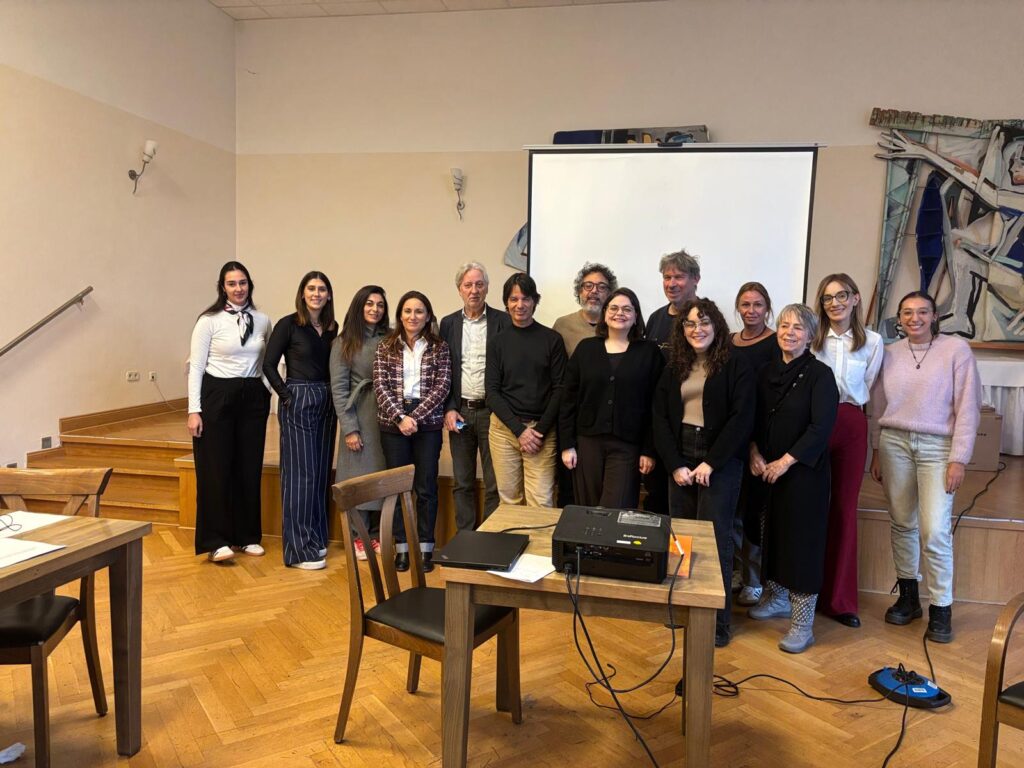
On November 6th and 7th, 2025, the BRIDGE consortium gathered in Bochum, Germany, for our first face-to-face transnational partnership meeting. With three representatives from each partner country in attendance, these two intensive days marked a significant milestone in bringing our collaborative vision to life.
Day 1: Building Foundations
Welcome to Bridgeland
The meeting kicked off with a creative icebreaker activity that perfectly embodied the spirit of our project. Participants were divided into three mixed-country groups and asked to imagine themselves as council members of “Bridgeland” – a utopian state where each person championed an important cultural characteristic from their home country. This exercise not only broke the ice but also highlighted the intercultural dialogue at the heart of BRIDGE.
Defining Our Target Audience
Following introductions by our Project Coordinator, each partner organization presented their operational context with a specific focus on the project’s target group. These presentations confirmed that all partners possess the necessary networks of local associations and dedicated centers to effectively reach and engage both social workers and young migrants, including unaccompanied foreign minors, throughout the project activities.
Research and Training Framework (WP2)
QBS Gewerkstatt, our German partner and WP2 Leader, presented the comprehensive work package model structured around three key components:
A. Comparative Map
Each partner will contribute current data and identify two good practices regarding the situation of Unaccompanied Minors (UAMs) in their country. The German team will synthesize this input into a comprehensive Comparative Map providing a pan-European perspective.
B. Needs Assessment
This critical phase will involve:
- Surveys administered to 50 social workers (10 per country)
- Five focus groups across partner countries, each bringing together 12 migrant minors (including 4 unaccompanied minors) and 4 social workers
- The Greek team (VELA) will develop the guidelines and procedures for conducting these focus groups to ensure consistency
C. Training Kit Development
Based on findings from the Comparative Map and Needs Assessment, Parsec will develop our Training Kit around four essential modules:
- Empathic Listening
- Peer Education and Youth Participation
- Intercultural Mediation and Conflict Navigation
- Safeguarding, Case Management & Referral Pathways
Timeline Confirmed:
- End of January 2026: Desk research and initial survey analysis completed
- December 2025 – February 2026: Focus groups conducted; country reports produced
- April – May 2026: Training modules developed
Communication Strategy (WP5)
After lunch, Asociación Creativa (Spain) presented our dissemination strategy. Key agreements reached include:
Website Management: Project updates and articles published bi-monthly to align with milestones
Social Media: Rotating weekly content creation cycle, with each partner producing content approximately every five weeks
Video Production: Each partner will create a promotional video featuring interviews with a migrant minor and a social worker, following a standardized script prepared by the Spanish team
The Spanish team will also develop standardized templates to ensure visual consistency across all partner content, and will propose logo design options for consortium voting.
Day 2: Coordination and Planning
Quality Systems and Tools
The Project Coordinator provided detailed training on our project platform, with emphasis on quality assessment systems and budget management. Partners reaffirmed their commitment to utilizing key coordination tools:
- EU-Monitor platform for formal reporting
- Project Google Group for general communication
- WhatsApp Group for rapid communication during meetings
Looking Ahead
The consortium established future meeting schedules:
Steering Meetings: Bi-monthly on the first Thursday of each relevant month at 10:00 CET, beginning December 2025
Transnational Meetings:
- June 29 – July 3, 2026: Training session in the Netherlands (4 representatives per country)
- February 3-6, 2027: Partnership meeting in the Canary Islands, Spain (2 representatives per country)
- Greece meeting and final conference in Rome: Dates TBD
Moving Forward Together
As we departed Bochum, the energy and commitment among partners was palpable. The meeting succeeded not only in clarifying our work plan and timelines but also in strengthening the personal connections that will sustain our collaboration over the coming months.
Our next steps are clear: desk research is already underway, survey preparations are advancing, and focus group planning is in motion. The BRIDGE project is moving from planning to action.
Stay tuned for updates as we begin gathering insights from social workers and young migrants across our five partner countries. Their voices will shape the training tools and methodologies that will ultimately empower youth workers throughout Europe.
About the BRIDGE Project
BRIDGE (Building Resilience through Intercultural Dialogue and Growth in Europe) is an Erasmus+ project bringing together partners from Italy, Spain, Germany, the Netherlands, and Greece to develop innovative training methodologies and practical tools for youth workers supporting young migrants and refugees.